
Building Your Unique Sound as an EDM Producer in 2026
From Copying to Creating
In 2026, the EDM and Dance Pop landscape is more saturated than ever — but also more open than ever. Millions of producers have access to the same sounds, the same DAWs, the same tutorials, and even the same AI tools. That means one thing: your sound is your only real advantage. Labels aren’t signing “the next whoever” anymore. They’re signing producers with identity — artists whose music immediately tells the listener who created it. And the good news? Building a unique sound is not some mystical process. It’s a strategic and creative evolution that ANY emerging producer can follow — even in a bedroom studio. Let’s break down how producers in 2026 shape their sonic identity, and how you can do the same.
Stop Trying to Be Original — Start Trying to Be Honest
A huge misconception among young producers is that “having a unique sound” means inventing something completely new. But in practice, every major EDM artist is a blend of influences:
- Fred again.. mixes emotional storytelling, UK influences, sample-based textures
MEDUZA took deep house drums and made them stadium-sized - Joel Corry blends club energy with super clean commercial toplines
- Alok created a Brazilian pop-house crossover that now sets global trends
- ARTBAT reinvented melodic techno using simple but massive sound design
None of them reinvented the wheel.
They refined what felt natural until it became unmistakably theirs. Your unique sound begins when you stop forcing originality and start choosing what genuinely resonates with you — emotionally, rhythmically, and aesthetically.
Build Your Sound Around 3 Anchors: Drums, Harmony, and Vocal Style
A unique sound isn’t about 100 complicated layers.It’s about 3 core decisions you repeat consistently.
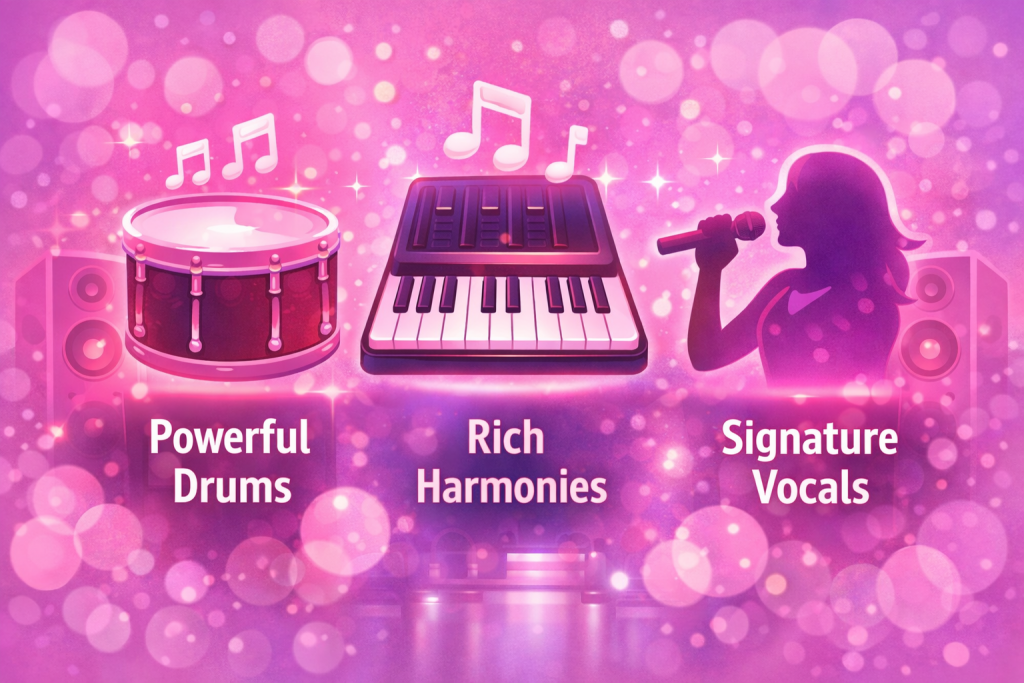
Your drums (your energy identity)
Are your drums punchy and club-driven? Soft and groovy? Minimal? Wide and aggressive? Your kick and drum character is the most consistent part of your identity.
Your harmonic world (your emotional identity)
Do you gravitate toward: Uplifting major chords? Melancholic minor progressions? Simple 2-chord loops? Tense, cinematic harmonies? You’ll notice patterns — use them intentionally.
Your vocal style (your commercial identity)
In 2026, vocal identity is everything. Do your tracks feature: Soft female toplines? Powerful belted choruses? Chopped emotional samples? Speech-like rhythms? Moody vocoder lines? Pick a vocal aesthetic and refine it.
Those three decisions already shape 60% of your artist fingerprint.
Use Reference Tracks — But Use Them Differently
Producers often misunderstand references. They copy them instead of studying them.
Here’s how professionals use references in 2025:
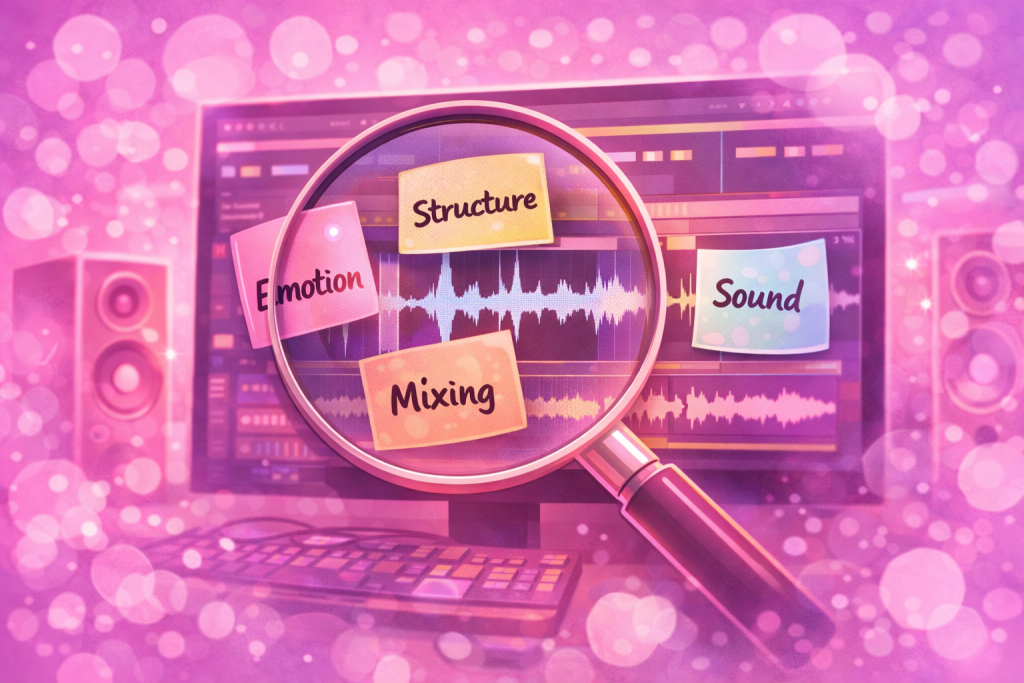
- Reference for emotion → “What feeling does this track evoke at 0:20?”
- Reference for structure → “How does the energy rise into the drop?”
- Reference for sound palette → “Which textures define the atmosphere?”
- Reference for mixing → “How loud is the vocal? How warm is the bass?”
You shouldn’t recreate a track. You should deconstruct why it works — and recreate the logic, not the sound. That’s how influence turns into identity.
Develop a Signature Element
Every recognizable producer has one recurring signature:
- Kygo → tropical plucks + warm vocal chops
- Fisher → bouncy bass + minimal vocals
- Lost Frequencies → folky acoustic textures blended with electronic elements
- Imanbek → chopped low vocals
- ZHU → dark, whispered vocals + analog textures
- Fred again.. → diaristic samples + emotional pads
Your signature could be:
- a specific reverb tonal color
- a vocal processing style
- a type of lead sound
- a rhythmic pattern
- a texture (e.g. vinyl noise, foley, soft pads)
- a chord style
Identify something you LOVE — then use it repeatedly, intentionally. Repetition creates recognition.
Use 2025’s Tools to Your Advantage
Producing in 2026 means having access to:
- AI stem separation
- AI vocal generation (clean but requires ethical use)
- AI melody assistants
- hyper-advanced sound libraries
- sample packs tailored to micro-genres
- DAW-integrated smart tools (FL AI Mastering, Ableton 12 updates, Logic’s smart
adaptive EQ etc.)
These tools can speed up your workflow, but they won’t build your identity. If you rely on them blindly, you’ll sound like every other beginner. Use modern tools for:
- experimentation
- inspiration
- workflow optimization
But let your taste make the final decisions.
Your Sound Comes From Volume
Every producer with a a has one thing in common: They made hundreds of tracks before they found their voice. Identity isn’t discovered — it’s built. It emerges through quantity, consistency, and iteration. The more tracks you finish, the clearer your taste becomes. The clearer your taste becomes, the stronger your identity grows. The stronger your identity grows, the more labels pay attention. Your sound isn’t an accident — it’s a reflection of your habits.
Your Sound Is What You Keep Saying “No” To
Identity is defined by boundaries. When you start saying: “This vocal style doesn’t fit me.”
- “This drop is good, but it’s not me.”
- “I don’t produce this type of sound anymore.”
…you begin shaping your style more clearly. Every “no” is actually a step toward your “yes.” Professional artists don’t do everything. They do their thing, over and over, better and better.
Conclusion: Building a Unique Sound
Here’s the truth: You don’t find your sound. You build it — through consistency, taste, and intention. If you follow the path above, your sound will naturally emerge through:
- your recurring choices
- your favorite emotional tones
- your preferred rhythms
- your vocal aesthetic
- your production habits
- your taste
- and your boundaries
A unique sound isn’t a goal — it’s a byproduct of doing the work. And in 2026, producers with identity rise faster than ever.